


Where closest to the sea from Warsaw
The closest seaside place to Warsaw is the Baltic Sea coast, and one of the popular places on this coast is Mielno.
Where to go from Warsaw to the sea?
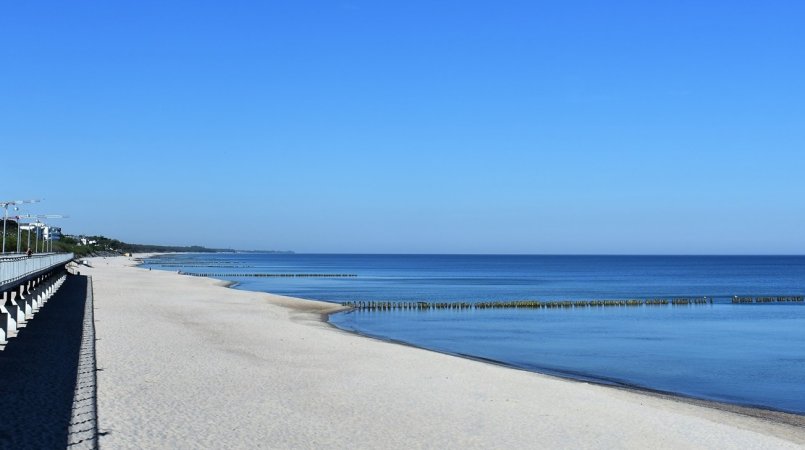
Mielno is famous for its wide and beautiful beaches, which are ideal for sunbathing, walking and recreation. The Baltic Sea and sand are the main assets of the town. The city has a charming promenade, which is a great place for evening walks, shopping and tasting local cuisine in restaurants and cafes. Mielno offers a wide variety of entertainment, including water sports, water parks, cultural events and much more, which means you can tailor your stay to suit your interests. The town has a pleasant seaside atmosphere, which is conducive to rest and relaxation. This is a place where you can break away from everyday life and enjoy the tranquility by the sea.
Of course, the choice of a place for a weekend by the sea depends on individual preferences, but Mielno is one of the most popular holiday destinations on the coast among residents of the capital due to its close proximity to Warsaw, beautiful beaches and a wide range of attractions.
How to get to Mielno by car
In Warsaw, we enter the A2 motorway and drive towards Łódź. At the Stryków interchange, take the A1 motorway, which we travel to Grudziądz. After passing the Vistula in the vicinity of this city, take the S5 road. After Świeć we leave the express and through Tuchola, Chojnice, Człuchów we reach Koszalin. From here we are the last 20 minutes drive away from Mielno.
How to get to Mielno by train from Warsaw?
From Warsaw Central to Koszalin we will arrive by train without a change. The journey takes 6 hours and 12 minutes. The route is 525 km long and runs through Iława, Malbork, Tricity, Słupsk and Sławno. From Koszalin to Mielno it is easy to get by taxi, buses and private buses, and in summer there are railbuses to the sea several times during the day. Koszalin and Mielno stations are only 13 km away.
Baltic Sea — Jewel of the North
The Baltic Sea is a magnificent and unique part of the European landscape that extends north from Central Europe. Although it is not as recognizable as the Mediterranean or the Adriatic, it has a lot to offer both tourists and nature lovers.
Rivers introduce large amounts of fresh water into the Baltic Sea, which makes its water less salty than in other seas. This specific mix of waters creates unique environmental conditions and determines the presence of diverse species of fauna and flora.
The second distinguishing feature of this body of water is its characteristic coastline. It extends over 8,000 kilometers, including beaches, cliffs, lagoons, and vast swampy areas. The Baltic Sea coast is a place where you can meet migratory birds that stop here on their migration route, as well as numerous species of fish that use these areas as a breeding site.
For centuries it was an area of intense commercial and cultural activity. The ports on the Baltic Sea were important trade and cultural hubs that connected Northern Europe with other parts of the continent. Today, many of these historical cities on the Baltic Sea retain their charm and attract tourists with architecture, museums and festivals.
Another distinguishing feature of the Baltic Sea is its economic role. It is an important transport route, connecting the countries of Central and Northern Europe with the rest of the world. The ports on the Baltic handle significant traffic of goods, and the coastal areas are important centers of the fishing and tourism industries.
The last, but no less important, distinguishing feature is the Baltic Sea ecosystem. Unique animal species such as grey seals, porpoises and walruses can be observed here.
The Baltic Sea is a fascinating place of extraordinary character and cultural, economic and ecological significance. It is a jewel of the North that deserves protection to pass on its beauty and wealth to future generations.


Book your stay at Hotel Unitral

Welcome to the family

Senator in Dźwirzyno

Hotel Unitral in Mielno

